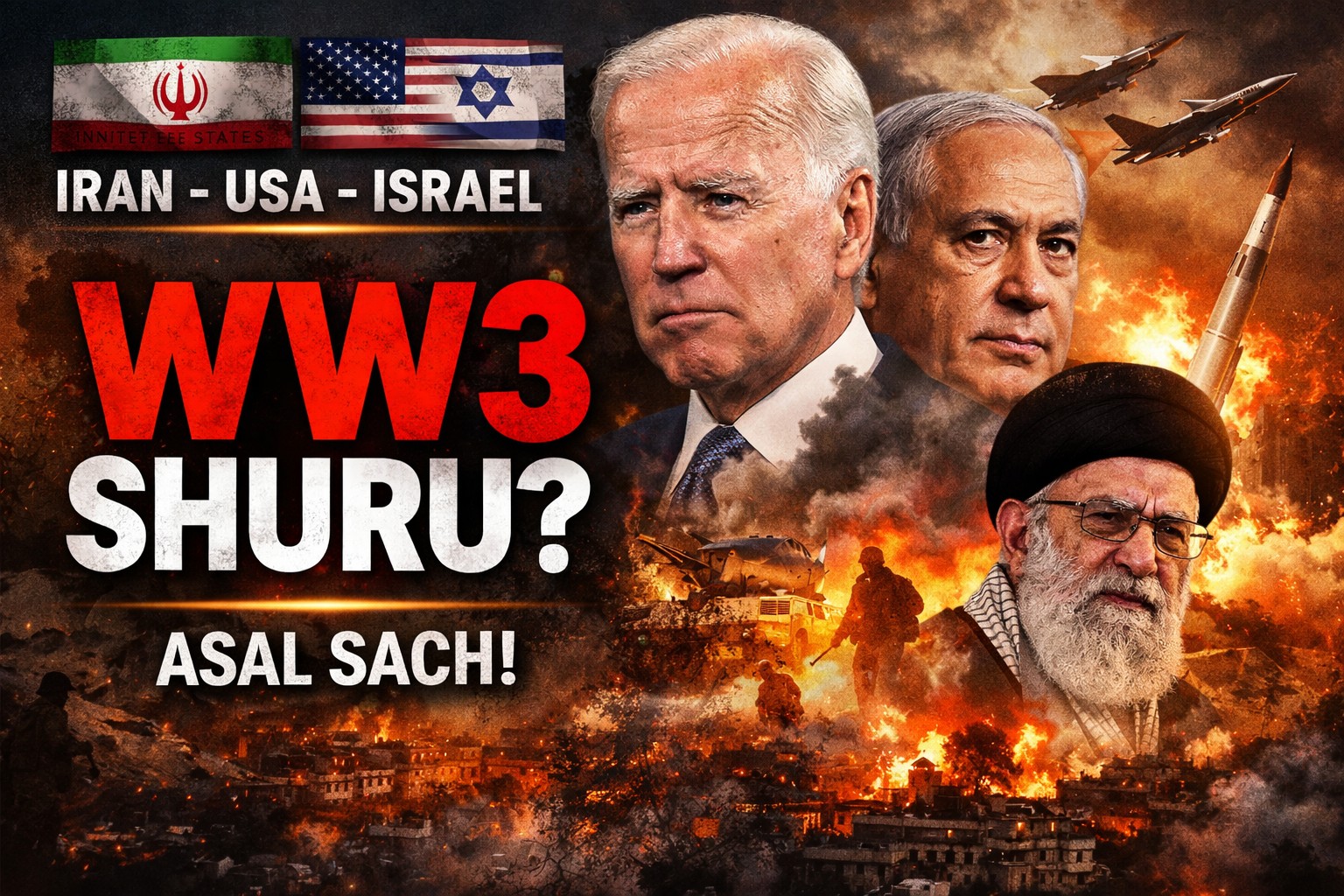
Imagine this: February 28, 2026. Midnight over Tehran. The sky is on fire. Israeli and American jets strike without warning. A missile slams into the Supreme Leader’s compound. Ayatollah Ali Khamenei is dead. Top commanders fall with him. In one night, Iran’s leadership is shattered.
Then comes the retaliation. Hundreds of missiles and drones rain down on Israel. US bases across the Gulf explode. Oil tankers choke in the Strait of Hormuz. The price of oil shoots through the roof. The world holds its breath.
This is not just another war. This is the clash that could redraw the map of the Middle East forever. Nuclear shadows, hidden agendas, and a deadly power game that has been building for decades. Welcome to the real story – from the 1953 coup to the flames of 2026. This is investigative storytelling at its rawest. Stay with me… because what you’re about to hear will change how you see the world.
Let’s go back to the beginning. It all started in 1953. Iran’s Prime Minister Mohammad Mossadegh stood up and said, “Our oil belongs to us.” He nationalized the British oil company. America and Britain panicked. The CIA launched Operation Ajax – a secret coup. Mossadegh was overthrown. The Shah was put back in power. Iranians never forgot. That day planted the first seeds of hatred toward America.
Fast forward to 1979 – the Iranian Revolution. Millions poured into the streets shouting, “The Shah sold us to America!” Ayatollah Khomeini took charge and declared the Islamic Republic. Students stormed the US Embassy and held 52 Americans hostage for 444 days. Iran called it payback for 1953. At the same time, Iran turned against Israel, labeling it an occupier on Muslim land.
Now the nuclear question. Iran had started its nuclear program under the Shah for peaceful energy. After the revolution, the program continued. The world grew suspicious: was Iran secretly building a bomb? In 2015, President Obama struck the JCPOA deal. Iran agreed to limit uranium enrichment; the West lifted sanctions. It was a rare moment of hope.
But in 2018, President Trump tore up the deal, calling it “the worst deal ever.” Iran responded by ramping up enrichment – reaching 60 percent, dangerously close to the 90 percent needed for a bomb. International reports showed Iran was on the edge.
By 2025, talks restarted under Trump’s return. He gave Iran a 60-day ultimatum. Iran refused. Then, in June 2025, the first sparks flew. Israel launched Operation Rising Lion, striking nuclear sites. The US backed them. Iran fired back with missiles, but damage was limited. A shaky ceasefire followed… but everyone knew the real storm was coming.
Now the breaking chapter. February 28, 2026. Operation Epic Fury and Roaring Lion begin. Over 900 strikes in a single day. Nuclear labs in Natanz and Isfahan, missile factories, air-defense systems – all hit hard. Supreme Leader Khamenei is assassinated. Top generals are gone. US forces destroy naval bases and the huge oil terminal on Kharg Island.
Iran strikes back instantly. Waves of missiles and drones slam into Israel. American bases in Bahrain, Jordan, Kuwait, Qatar, Saudi Arabia, and the UAE are under fire. Hezbollah rains rockets from Lebanon. The Houthis join from Yemen. Iran seizes control of the Strait of Hormuz, threatening oil tankers and demanding payment in Chinese yuan.
By March 2026, the war rages on. The US briefly pauses strikes on energy plants to offer talks. Iran rejects them outright. Israeli bombs have already destroyed power stations, steel factories, and residential neighborhoods in Tehran. More than 1,900 Iranians are dead. Israel reports 28 deaths. The Gulf sees injuries and panic. Iran’s missile production is crippled, its navy badly damaged… yet it fights on through proxies, cyber attacks, and direct launches.
This is no longer a regional fight. Global oil prices have skyrocketed. Economies tremble. The world is watching in fear.
(Fast-cut montage: Night-vision strikes on Tehran, missiles streaking toward Haifa, US aircraft carriers slicing through the Gulf, smoke rising from burning oil fields, terrified families, urgent press conferences. Heartbeat sound under the music.)
So what’s really driving this? Let’s pull back the curtain.
Israel’s motives: For Prime Minister Netanyahu, Iran is the head of the octopus. Hezbollah, Hamas, the Houthis – all funded and armed by Tehran. After the October 7, 2023 attacks, Israel decided to cut off every tentacle. A nuclear Iran is an “existential threat” – one bomb could wipe Israel off the map. Israel wants regime change, the missile program destroyed, and total security so it can normalize ties with Arab neighbors and remain the dominant power in the Middle East.
America’s role: Under Trump, this is framed as “regime change for freedom.” The public goals: stop the nuclear program, crush the missile threat, and break the “Axis of Resistance.” But the hidden agenda runs deeper – control of oil flows, weakening Iran’s alliances with Russia and China, and protecting Gulf allies who buy American weapons. Some analysts whisper it’s also about keeping energy prices in check and sending a message to America’s rivals.
Iran’s strategy: Iran plays “forward defense.” Instead of waiting to be attacked at home, it fights through a web of proxies. Its nuclear program is both shield and sword – officially peaceful, but everyone knows it’s leverage. In retaliation, Iran now hits wide and direct, dragging Gulf states into the fire to raise the cost for the US. The real goal: regime survival. After Khamenei’s death, Mojtaba Khamenei takes power amid protests. Iran wants to bleed America and Israel economically and militarily until the world forces them to stop.
This is classic power chess: oil, influence, survival. Nuclear weapons are only the visible spark. The real game is about who controls the future of the Middle East.
(Visuals: Animated maps showing proxy “tentacles,” shadowy figures of leaders in secret rooms, balance-of-power graphics tipping wildly, raw footage of protests in Tehran and fear in Tel Aviv.)
As 2026 unfolds, the war still burns. Thousands are dead. Millions displaced. The question hangs in the air: Will this bring regime change? Will Iran race for a bomb? Or will exhausted parties finally sit at the table?
One thing is certain: the fire in the Middle East does not stay contained. Sky-high oil prices, global inflation, and fragile security affect every corner of the planet. History shows that coups and airstrikes rarely bring lasting peace. Real change comes from understanding, not just force.
Iranians want dignity and freedom. Israelis want security. Americans want stability. Yet hidden agendas and old egos have thrown the entire region into flames.
What do you think? Will this war reshape the world? Drop your thoughts below and share this with anyone who needs to see the full picture. This is more than a documentary. It’s a warning about our shared future.














The March to War Iran, America, and Israel’s 2025-2026 Conflict
* กระทู้นี้สามารถใช้งานได้เฉพาะผู้ที่มี Link นี้เท่านั้นค่ะImagine this: February 28, 2026. Midnight over Tehran. The sky is on fire. Israeli and American jets strike without warning. A missile slams into the Supreme Leader’s compound. Ayatollah Ali Khamenei is dead. Top commanders fall with him. In one night, Iran’s leadership is shattered.
Then comes the retaliation. Hundreds of missiles and drones rain down on Israel. US bases across the Gulf explode. Oil tankers choke in the Strait of Hormuz. The price of oil shoots through the roof. The world holds its breath.
This is not just another war. This is the clash that could redraw the map of the Middle East forever. Nuclear shadows, hidden agendas, and a deadly power game that has been building for decades. Welcome to the real story – from the 1953 coup to the flames of 2026. This is investigative storytelling at its rawest. Stay with me… because what you’re about to hear will change how you see the world.
Let’s go back to the beginning. It all started in 1953. Iran’s Prime Minister Mohammad Mossadegh stood up and said, “Our oil belongs to us.” He nationalized the British oil company. America and Britain panicked. The CIA launched Operation Ajax – a secret coup. Mossadegh was overthrown. The Shah was put back in power. Iranians never forgot. That day planted the first seeds of hatred toward America.
Fast forward to 1979 – the Iranian Revolution. Millions poured into the streets shouting, “The Shah sold us to America!” Ayatollah Khomeini took charge and declared the Islamic Republic. Students stormed the US Embassy and held 52 Americans hostage for 444 days. Iran called it payback for 1953. At the same time, Iran turned against Israel, labeling it an occupier on Muslim land.
Now the nuclear question. Iran had started its nuclear program under the Shah for peaceful energy. After the revolution, the program continued. The world grew suspicious: was Iran secretly building a bomb? In 2015, President Obama struck the JCPOA deal. Iran agreed to limit uranium enrichment; the West lifted sanctions. It was a rare moment of hope.
But in 2018, President Trump tore up the deal, calling it “the worst deal ever.” Iran responded by ramping up enrichment – reaching 60 percent, dangerously close to the 90 percent needed for a bomb. International reports showed Iran was on the edge.
By 2025, talks restarted under Trump’s return. He gave Iran a 60-day ultimatum. Iran refused. Then, in June 2025, the first sparks flew. Israel launched Operation Rising Lion, striking nuclear sites. The US backed them. Iran fired back with missiles, but damage was limited. A shaky ceasefire followed… but everyone knew the real storm was coming.
Now the breaking chapter. February 28, 2026. Operation Epic Fury and Roaring Lion begin. Over 900 strikes in a single day. Nuclear labs in Natanz and Isfahan, missile factories, air-defense systems – all hit hard. Supreme Leader Khamenei is assassinated. Top generals are gone. US forces destroy naval bases and the huge oil terminal on Kharg Island.
Iran strikes back instantly. Waves of missiles and drones slam into Israel. American bases in Bahrain, Jordan, Kuwait, Qatar, Saudi Arabia, and the UAE are under fire. Hezbollah rains rockets from Lebanon. The Houthis join from Yemen. Iran seizes control of the Strait of Hormuz, threatening oil tankers and demanding payment in Chinese yuan.
By March 2026, the war rages on. The US briefly pauses strikes on energy plants to offer talks. Iran rejects them outright. Israeli bombs have already destroyed power stations, steel factories, and residential neighborhoods in Tehran. More than 1,900 Iranians are dead. Israel reports 28 deaths. The Gulf sees injuries and panic. Iran’s missile production is crippled, its navy badly damaged… yet it fights on through proxies, cyber attacks, and direct launches.
This is no longer a regional fight. Global oil prices have skyrocketed. Economies tremble. The world is watching in fear.
(Fast-cut montage: Night-vision strikes on Tehran, missiles streaking toward Haifa, US aircraft carriers slicing through the Gulf, smoke rising from burning oil fields, terrified families, urgent press conferences. Heartbeat sound under the music.)
So what’s really driving this? Let’s pull back the curtain.
Israel’s motives: For Prime Minister Netanyahu, Iran is the head of the octopus. Hezbollah, Hamas, the Houthis – all funded and armed by Tehran. After the October 7, 2023 attacks, Israel decided to cut off every tentacle. A nuclear Iran is an “existential threat” – one bomb could wipe Israel off the map. Israel wants regime change, the missile program destroyed, and total security so it can normalize ties with Arab neighbors and remain the dominant power in the Middle East.
America’s role: Under Trump, this is framed as “regime change for freedom.” The public goals: stop the nuclear program, crush the missile threat, and break the “Axis of Resistance.” But the hidden agenda runs deeper – control of oil flows, weakening Iran’s alliances with Russia and China, and protecting Gulf allies who buy American weapons. Some analysts whisper it’s also about keeping energy prices in check and sending a message to America’s rivals.
Iran’s strategy: Iran plays “forward defense.” Instead of waiting to be attacked at home, it fights through a web of proxies. Its nuclear program is both shield and sword – officially peaceful, but everyone knows it’s leverage. In retaliation, Iran now hits wide and direct, dragging Gulf states into the fire to raise the cost for the US. The real goal: regime survival. After Khamenei’s death, Mojtaba Khamenei takes power amid protests. Iran wants to bleed America and Israel economically and militarily until the world forces them to stop.
This is classic power chess: oil, influence, survival. Nuclear weapons are only the visible spark. The real game is about who controls the future of the Middle East.
(Visuals: Animated maps showing proxy “tentacles,” shadowy figures of leaders in secret rooms, balance-of-power graphics tipping wildly, raw footage of protests in Tehran and fear in Tel Aviv.)
As 2026 unfolds, the war still burns. Thousands are dead. Millions displaced. The question hangs in the air: Will this bring regime change? Will Iran race for a bomb? Or will exhausted parties finally sit at the table?
One thing is certain: the fire in the Middle East does not stay contained. Sky-high oil prices, global inflation, and fragile security affect every corner of the planet. History shows that coups and airstrikes rarely bring lasting peace. Real change comes from understanding, not just force.
Iranians want dignity and freedom. Israelis want security. Americans want stability. Yet hidden agendas and old egos have thrown the entire region into flames.
What do you think? Will this war reshape the world? Drop your thoughts below and share this with anyone who needs to see the full picture. This is more than a documentary. It’s a warning about our shared future.