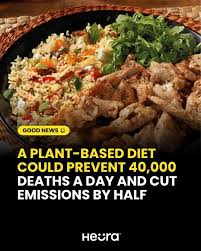
แนวอาหารสุขภาพนอกจากส่งผลดีต่อสุขภาพ ช่วยชีวิต ผู้คนทั่วโลก 40,000 รายต่อวัน
จาก ภัยโรคเรื้อรัง นานาชนิด และ โรคมะเร็ง บางชนิด นอกจาก ป่วยเรื้อรังสุขภาพทรุดโทรม
ก่อนวัยอันควร พิการ นอนติดเตียงจำนวนนับล้านคน ๆ
อาหารแนวสุขภาพ เน้น พืช ผัก ผลไม้ ธัญพืช หลีกเลี่ยง อาหารเนื้อสัตว์ และ งดอาหาร
แปรรูป พวก เบคอน ไส้กรอก ส่งผลต่อสุขภาพ โดยรวม ลดภาระค่าใช้จ่ายชีวิต ประจำวัน
จาก ภัยโรคเรือรังที่บั่นทอนสุขภาวะ นอกจากจะส่งผลดีต่อสิ่งแวดล้อม ลดมลภาวะ อากาศ
ลด โรคร้อน ลดความเสี่ยงติดเชื้อโรคระบาด จาก อุตสาหกรรมฟาร์มปศุสัตว์ ที่ก่อปัญหาเรื้อรัง
ต่อเนื่อง มาอย่าง ยาวนาน จากการทำลายป่าไม้ เพื่อขยายพื้นที่ฟาร์มทำลายระบบนิเวศน์
อาหารหลักจาก พืช ผัก ผลไม้ ธัญพืช มีสารอาหารเพียงพอต่อสุขภาพ ต่อการดำรงชีวิต ประจำวัน
อดีตผลงานวิจัย ข้อมูล ดี ๆ มีประโยขน์ ได้ถูกบิดเบียน จาก กลุ่มอุตสาหกรรมที่เสียประโยชน์มหาศาล
มาอย่าง ยาวนาน
อ้างอิงจาก
กลุ่มผู้เชี่ยวชาญ ด้านโภชนาการ นักวิจัยสุขภาพ และ คณาจารย์แพทย์จาก มหาวิทยาลัยแพทย์
ที่มีชื่อเสียง จาก งานศึกษา สุ่มเก็นตย มาอย่างยาวนาน ต่อเนื่อง
-------------------------------------------------------------------------------------------
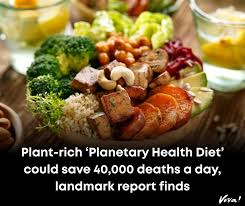
Planetary health diet’ could save 40,000 deaths a day, landmark report finds
Adoption of a plant-rich “planetary health diet” could prevent 40,000 early deaths a day across
the world, according to a landmark report.
The diet – which allows moderate meat consumption – and related measures would also slash
the food-related emissions driving global heating by half by 2050. Today, a third of greenhouse
gas emissions come from the global food system and taming the climate crisis is impossible
without changing how the world eats, the researchers said.
Food production is also the biggest
cause of the destruction of wildlife and forests and the pollution of water.
The planetary health diet (PHD) sets out how the world can simultaneously improve the health of
people and the planet, and provide enough food for an expected global population of 9.6 billion
people by 2050.
The diet is flexible, allowing it to be adapted to local tastes, and can include some animal products
or be vegetarian or vegan. However, all versions advise eating more vegetables, fruits, nuts, legumes
and whole grains than most people in the world currently eat. In many places, today’s diets are unhealthy
and unsustainable due to too much meat, milk and cheese, animal fats and sugar.
People in the US and Canada eat more than seven times the PHD’s recommended amount of red meat,
while it is five times more in Europe and Latin America, and four times more in China. However, in some
regions where people’s diets are heavily reliant on starchy foods, such as sub-Saharan Africa, a small
increase in chicken, dairy and eggs would be beneficial to health, the report found.
Severe inequalities in the food system must also be ended to achieve healthy and sustainable diets,
the researchers said. The wealthiest 30% of the world’s population generates more than 70% of
food-related environmental damage, it found. Furthermore, 2.8 billion people cannot afford a healthy
diet and 1 billion are undernourished, despite enough food being produced globally. The food system
is also failing the 1 billion people living with obesity, the report said.
The report recommends shifting taxes to make unhealthy food more costly and healthy food cheaper,
regulating the advertising of unhealthy food and using warning labels, and the shifting of today’s
The report recommends shifting taxes to make healthy food cheaper. Photograph: Wu Hao/EPA
“What we put on our plates can save millions of lives, cut billions of tonnes of emissions, halt the
loss of biodiversity, and create a fairer food system,” said Prof Johan Rockström, who co-chaired
food systems is not only possibl
e, it’s essential to securing a safe, just, and sustainable future for all.”
“This is not a deprivation diet,” said Prof Walter Willett of the Harvard TH Chan school of public health,
and another commission co-chair. “This is something that could be delicious, aspirational and healthy.
It also allows for cultural diversity and individual preferences, providing flexibility.”
continents. It builds on the
2019 report that introduced the PHD, but includes new evidence of the
health benefits of the diet.
“We have been able to look at this diet in relation to health outcomes such as total mortality, diabetes,
respiratory diseases, heart disease, stroke, etc and we found very strong inverse relationships”
said Willett. The diet was also linked to reduced cancer and neurodegenerative diseases.
a year in adults. The estimate did not include the impact of the diet reducing obesity, meaning it is
probably an underestimate.
The PHD recommends plant-rich, flexible diets, including:
Fruits and vegetables – at least five portions a day
Whole grains – three to four portions a day
Nuts – one portion per day
Legumes (beans, peas, lentils) – one portion per day
Dairy – one serving of milk, yoghurt or cheese portions a day
Eggs – three to four a week
Dr Marco Springmann from UCL in the UK and an author of the report said the differences between
the PHD and current diets
‘What needs to be reduced differs a lot [from country to country]. In low income countries, it’s the
starchy foods and grains.’ Photograph: eFesenko/Alamy
The PHD is better than current average diets for many nutrients, including fatty acids, fibre, folate,
magnesium and zinc. Adequate iron and vitamin B12 could be provided by green leafy vegetables,
fermented soy foods and algae, the researchers said.
Moving diets towards the PHD could be achieved by helping consumers make better everyday choices,
said Prof Line Gordon, director of the Stockholm Resilience Centre, for example by shifting taxes to
make healthy foods cheaper, and putting warning labels on unhealthy foods. “But it is not just about
getting prices lower, it’s also about bringing purchasing power up so that people can afford a
healthier diet” she said.
“Our recommendations are grounded in scientific evidence and real-world experience,” Gordon said.
“Changes are already under way, from school meal programmes to regenerative agriculture and
food waste reduction initiatives.”
Alongside a shift in diets, the report calls for other changes to the food system, including cutting
the loss and waste of food, greener farming practices, and decent working conditions, as a third
of food workers earn below living wages.
“The [new report] is a landmark achievement. It is a state-of-the-art scientific assessment that
quantifies healthy diets for all human beings in the world and the environmental boundaries all
food systems need to meet to stay safe. So we have a really rigorous foundation for our [results].














‘Planetary health diet’ could save 40,000 deaths a day,