🇰🇭 Traditional Khmer dance reflects way of life closely connected to nature. 🇰🇭
"Ton Songko Prey" Dance is a cultural heritage of the Mon-Khmer people that dates back to prehistoric times. It has been preserved to the present day by Khmer communities living in forests and mountainous areas of Anchanh Rung village in Kampong Chhnang Province.
In the past, this dance was an essential sacred ritual that had to be performed before going hunting in the forest. The success or failure of the hunt was believed to depend on the performers’ dedication. It was conducted to seek blessings from sacred spirits and to offer sacrifices to ancestral souls for success and prosperity.
Today, the dance is commonly performed during important festivals. After preparing offerings, villagers gather together and sing to invite the spirits of their ancestors from the mountains and forests to partake in the offerings. Then, the Ton Song dance begins. The accompanying songs include Khla Krap, Loboka To, Sreng Pen, and Ton Songko Prey. The musical instruments used include gongs, drums, and puy, a type of drum.
These songs can sound eerie and haunting, as the singers are highly skilled. When listening, it may feel as though they are embodying spirits, demons, or witches. Meanwhile, male dancers portray male elephants and female dancers portray female elephants, wearing real horns to represent wild animals. Their movements closely imitate real elephants—the rhythm, body gestures, and swaying motions resemble animals courting each other, reflecting a long-standing hunting lifestyle.
All performers are villagers who live in remote mountainous and forest areas. Most dancers are middle-aged, indicating that they have real experience in hunting and familiarity with traditional rituals.
The Ton Songko Prey dance is a valuable cultural heritage with historical significance. It reflects the close relationship between humans and animals and is truly a branch of authentic Khmer culture. The loss of this dance would mean a decline in Khmer cultural heritage.
....................................................................
🇰🇭 การเต้นรำแบบเขมรดั้งเดิม..
สะท้อนวิถีชีวิตความใกล้ชิดธรรมชาติ🇰🇭
"การรำตันซองโกเปรย์" เป็นมรดกทางวัฒนธรรมของกลุ่มชนมอญ-เขมรที่มีมาตั้งแต่สมัยก่อนประวัติศาสตร์ และได้รับการอนุรักษ์มาจนถึงปัจจุบันโดยชุมชนชาวเขมรที่อาศัยอยู่ในพื้นที่ป่าและภูเขาของหมู่บ้านอันชันห์รุ่ง จังหวัดกำปงชนัง
ในอดีต การรำนี้ถือเป็นพิธีกรรมศักดิ์สิทธิ์ที่สำคัญ ซึ่งต้องแสดงก่อนออกล่าสัตว์ในป่า โดยเชื่อว่าความสำเร็จหรือความล้มเหลวของการล่าสัตว์ขึ้นอยู่กับความตั้งใจของผู้แสดง พิธีนี้จัดขึ้นเพื่อขอพรจากสิ่งศักดิ์สิทธิ์ และบูชายัญต่อดวงวิญญาณบรรพบุรุษ เพื่อความสำเร็จและความเจริญรุ่งเรือง
ในปัจจุบัน การรำนี้มักจัดแสดงในช่วงเทศกาลสำคัญ หลังจากเตรียมเครื่องบูชาแล้ว ชาวบ้านจะมารวมตัวกันและร้องเพลงเพื่อเชิญดวงวิญญาณของบรรพบุรุษจากภูเขาและป่าไม้ให้มาร่วมรับเครื่องบูชา จากนั้นจึงเริ่มการแสดงระบำตันซอง เพลงประกอบการแสดง ได้แก่ Khla Krap, Loboka To, Sreng Pen และ Ton Songko Prey เครื่องดนตรีที่ใช้ ได้แก่ ฆ้อง กลอง และ “ปุย” ซึ่งเป็นกลองชนิดหนึ่ง
บทเพลงเหล่านี้มีบรรยากาศน่าขนลุก ลึกลับ และน่ากลัวมากเนื่องจากนักร้องมีทักษะสูง เมื่อฟังแล้วจะรู้สึกเสมือนว่าพวกเขาเป็นตัวแทนของวิญญาณ ปีศาจ หรือแม่มด ขณะเดียวกัน นักเต้นชายจะแสดงเป็นช้างตัวผู้ และนักเต้นหญิงจะแสดงเป็นช้างตัวเมีย โดยสวมเขาจริงเพื่อแทนสัตว์ป่า ท่าทางการเคลื่อนไหวของพวกเขาเลียนแบบช้างจริง ทั้งจังหวะ การเคลื่อนไหวของร่างกาย และการโยกไหว ซึ่งมีลักษณะคล้ายสัตว์ที่กำลังเกี้ยวพาราสีกัน สะท้อนถึงวิถีชีวิตการล่าสัตว์ที่มีมาอย่างยาวนาน
ผู้แสดงทั้งหมดเป็นชาวบ้านที่อาศัยอยู่ในพื้นที่ห่างไกล ทั้งภูเขาและป่าไม้ โดยส่วนใหญ่เป็นคนวัยกลางคน ซึ่งแสดงให้เห็นว่าพวกเขามีประสบการณ์จริงในการล่าสัตว์และคุ้นเคยกับพิธีกรรมพื้นบ้าน
การรำตันซองโกเปรย์ถือเป็นมรดกทางวัฒนธรรมที่ทรงคุณค่าทางประวัติศาสตร์ สะท้อนถึงความสัมพันธ์อันใกล้ชิดระหว่างมนุษย์กับสัตว์ และเป็นส่วนหนึ่งของวัฒนธรรมเขมรอย่างแท้จริง การสูญเสียการรำนี้ย่อมหมายถึงการลดทอนคุณค่าของวัฒนธรรมเขมร
Picture credit : Unknown
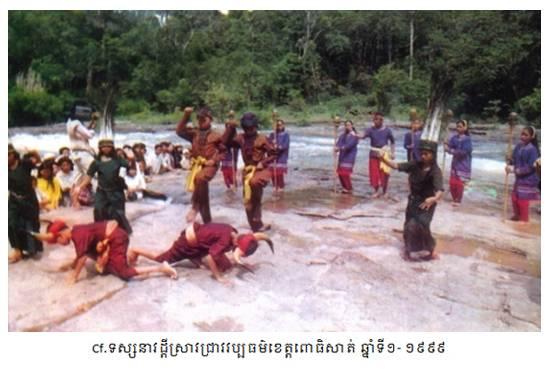













Khmer dance "Ton Songko Prey"/ การเต้นรำแบบเขมรดั้งเดิม "ตันซองโกเปรย์"
"Ton Songko Prey" Dance is a cultural heritage of the Mon-Khmer people that dates back to prehistoric times. It has been preserved to the present day by Khmer communities living in forests and mountainous areas of Anchanh Rung village in Kampong Chhnang Province.
In the past, this dance was an essential sacred ritual that had to be performed before going hunting in the forest. The success or failure of the hunt was believed to depend on the performers’ dedication. It was conducted to seek blessings from sacred spirits and to offer sacrifices to ancestral souls for success and prosperity.
Today, the dance is commonly performed during important festivals. After preparing offerings, villagers gather together and sing to invite the spirits of their ancestors from the mountains and forests to partake in the offerings. Then, the Ton Song dance begins. The accompanying songs include Khla Krap, Loboka To, Sreng Pen, and Ton Songko Prey. The musical instruments used include gongs, drums, and puy, a type of drum.
These songs can sound eerie and haunting, as the singers are highly skilled. When listening, it may feel as though they are embodying spirits, demons, or witches. Meanwhile, male dancers portray male elephants and female dancers portray female elephants, wearing real horns to represent wild animals. Their movements closely imitate real elephants—the rhythm, body gestures, and swaying motions resemble animals courting each other, reflecting a long-standing hunting lifestyle.
All performers are villagers who live in remote mountainous and forest areas. Most dancers are middle-aged, indicating that they have real experience in hunting and familiarity with traditional rituals.
The Ton Songko Prey dance is a valuable cultural heritage with historical significance. It reflects the close relationship between humans and animals and is truly a branch of authentic Khmer culture. The loss of this dance would mean a decline in Khmer cultural heritage.
....................................................................
🇰🇭 การเต้นรำแบบเขมรดั้งเดิม..
สะท้อนวิถีชีวิตความใกล้ชิดธรรมชาติ🇰🇭
"การรำตันซองโกเปรย์" เป็นมรดกทางวัฒนธรรมของกลุ่มชนมอญ-เขมรที่มีมาตั้งแต่สมัยก่อนประวัติศาสตร์ และได้รับการอนุรักษ์มาจนถึงปัจจุบันโดยชุมชนชาวเขมรที่อาศัยอยู่ในพื้นที่ป่าและภูเขาของหมู่บ้านอันชันห์รุ่ง จังหวัดกำปงชนัง
ในอดีต การรำนี้ถือเป็นพิธีกรรมศักดิ์สิทธิ์ที่สำคัญ ซึ่งต้องแสดงก่อนออกล่าสัตว์ในป่า โดยเชื่อว่าความสำเร็จหรือความล้มเหลวของการล่าสัตว์ขึ้นอยู่กับความตั้งใจของผู้แสดง พิธีนี้จัดขึ้นเพื่อขอพรจากสิ่งศักดิ์สิทธิ์ และบูชายัญต่อดวงวิญญาณบรรพบุรุษ เพื่อความสำเร็จและความเจริญรุ่งเรือง
ในปัจจุบัน การรำนี้มักจัดแสดงในช่วงเทศกาลสำคัญ หลังจากเตรียมเครื่องบูชาแล้ว ชาวบ้านจะมารวมตัวกันและร้องเพลงเพื่อเชิญดวงวิญญาณของบรรพบุรุษจากภูเขาและป่าไม้ให้มาร่วมรับเครื่องบูชา จากนั้นจึงเริ่มการแสดงระบำตันซอง เพลงประกอบการแสดง ได้แก่ Khla Krap, Loboka To, Sreng Pen และ Ton Songko Prey เครื่องดนตรีที่ใช้ ได้แก่ ฆ้อง กลอง และ “ปุย” ซึ่งเป็นกลองชนิดหนึ่ง
บทเพลงเหล่านี้มีบรรยากาศน่าขนลุก ลึกลับ และน่ากลัวมากเนื่องจากนักร้องมีทักษะสูง เมื่อฟังแล้วจะรู้สึกเสมือนว่าพวกเขาเป็นตัวแทนของวิญญาณ ปีศาจ หรือแม่มด ขณะเดียวกัน นักเต้นชายจะแสดงเป็นช้างตัวผู้ และนักเต้นหญิงจะแสดงเป็นช้างตัวเมีย โดยสวมเขาจริงเพื่อแทนสัตว์ป่า ท่าทางการเคลื่อนไหวของพวกเขาเลียนแบบช้างจริง ทั้งจังหวะ การเคลื่อนไหวของร่างกาย และการโยกไหว ซึ่งมีลักษณะคล้ายสัตว์ที่กำลังเกี้ยวพาราสีกัน สะท้อนถึงวิถีชีวิตการล่าสัตว์ที่มีมาอย่างยาวนาน
ผู้แสดงทั้งหมดเป็นชาวบ้านที่อาศัยอยู่ในพื้นที่ห่างไกล ทั้งภูเขาและป่าไม้ โดยส่วนใหญ่เป็นคนวัยกลางคน ซึ่งแสดงให้เห็นว่าพวกเขามีประสบการณ์จริงในการล่าสัตว์และคุ้นเคยกับพิธีกรรมพื้นบ้าน
การรำตันซองโกเปรย์ถือเป็นมรดกทางวัฒนธรรมที่ทรงคุณค่าทางประวัติศาสตร์ สะท้อนถึงความสัมพันธ์อันใกล้ชิดระหว่างมนุษย์กับสัตว์ และเป็นส่วนหนึ่งของวัฒนธรรมเขมรอย่างแท้จริง การสูญเสียการรำนี้ย่อมหมายถึงการลดทอนคุณค่าของวัฒนธรรมเขมร
Picture credit : Unknown