รูปปั้นนี้เป็นตัวแทนของหญิงชาวเขมรในอุดมคติ สะท้อนวัฒนธรรมดั้งเดิมของชาวเขมร การแต่งกายด้วย “ซัมปอต (sampot)” พร้อมเครื่องประดับ แสดงถึงอัตลักษณ์และวิถีชีวิตแบบดั้งเดิมของชุมชนในจังหวัด บันเตียเมียนเจย
ในด้านประวัติศาสตร์ พื้นที่นี้เคยมีความเกี่ยวข้องกับ "สยาม" โดยในช่วงศตวรรษที่ 14 สยามได้เข้ามามีอำนาจควบคุมกัมพูชา และพื้นที่ดังกล่าวถูกจัดให้อยู่ในเขตของศรีโสภณ ต่อมาในปี ค.ศ. 1907 สยามได้โอนอำนาจการปกครองให้แก่ ฝรั่งเศส ทำให้พื้นที่นี้ถูกรวมเข้าเป็นส่วนหนึ่งของจังหวัดพระตะบอง
กระทั่งในปี ค.ศ. 1988 จังหวัดบันเตียเมียนเจยได้แยกออกจากพระตะบองและจัดตั้งเป็นจังหวัดขึ้นมาอย่างเป็นทางการ ปัจจุบันมีด่านชายแดนสำคัญที่ ปอยเปต ซึ่งเป็นจุดเชื่อมต่อด้านการค้าและการเดินทางระหว่างไทย–กัมพูชา
คาดการณ์รูปปั้นนี้ถูกสร้างช่วงปี 1994
This statue represents the ideal Khmer woman, reflecting traditional Khmer culture. The attire, featuring the “sampot” along with traditional jewelry, expresses the identity and way of life of the local community in Banteay Meanchey Province.
Historically, this area was once associated with Siam. In the 14th century, Siam exercised control over Cambodia, and this region was incorporated into the Sisophon area. Later, in 1907, Siam transferred administrative control to France, and the area became part of Battambang Province.
In 1988, Banteay Meanchey was officially separated from Battambang and established as its own province. Today, it is home to an important border checkpoint at Poipet, serving as a key connection for trade and travel between Thailand and Cambodia.
estimated that this statue was built between 1994
Picture credit : Unknown
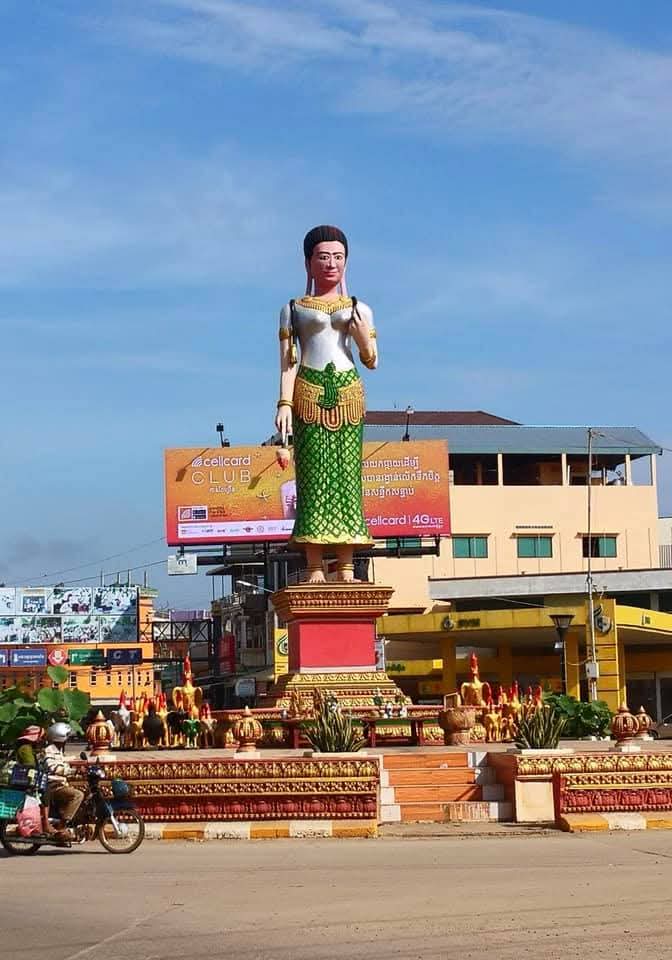
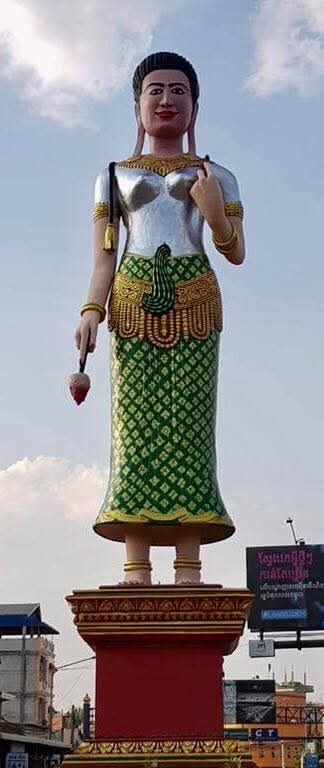
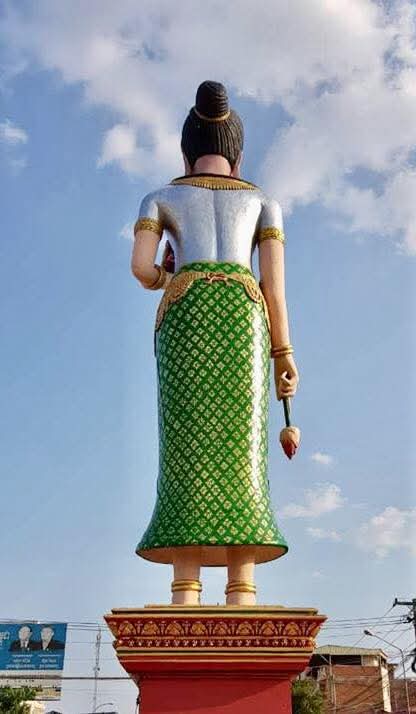













งานศิลปะ รูปปั้น สะท้อนวัฒนธรรมเขมร / Khmer sculptural art and culture
ในด้านประวัติศาสตร์ พื้นที่นี้เคยมีความเกี่ยวข้องกับ "สยาม" โดยในช่วงศตวรรษที่ 14 สยามได้เข้ามามีอำนาจควบคุมกัมพูชา และพื้นที่ดังกล่าวถูกจัดให้อยู่ในเขตของศรีโสภณ ต่อมาในปี ค.ศ. 1907 สยามได้โอนอำนาจการปกครองให้แก่ ฝรั่งเศส ทำให้พื้นที่นี้ถูกรวมเข้าเป็นส่วนหนึ่งของจังหวัดพระตะบอง
กระทั่งในปี ค.ศ. 1988 จังหวัดบันเตียเมียนเจยได้แยกออกจากพระตะบองและจัดตั้งเป็นจังหวัดขึ้นมาอย่างเป็นทางการ ปัจจุบันมีด่านชายแดนสำคัญที่ ปอยเปต ซึ่งเป็นจุดเชื่อมต่อด้านการค้าและการเดินทางระหว่างไทย–กัมพูชา
คาดการณ์รูปปั้นนี้ถูกสร้างช่วงปี 1994
This statue represents the ideal Khmer woman, reflecting traditional Khmer culture. The attire, featuring the “sampot” along with traditional jewelry, expresses the identity and way of life of the local community in Banteay Meanchey Province.
Historically, this area was once associated with Siam. In the 14th century, Siam exercised control over Cambodia, and this region was incorporated into the Sisophon area. Later, in 1907, Siam transferred administrative control to France, and the area became part of Battambang Province.
In 1988, Banteay Meanchey was officially separated from Battambang and established as its own province. Today, it is home to an important border checkpoint at Poipet, serving as a key connection for trade and travel between Thailand and Cambodia.
estimated that this statue was built between 1994
Picture credit : Unknown