https://www.facebook.com/funxmanager/posts/how-thailand-became-the-sick-man-of-asia/1428061372667243/
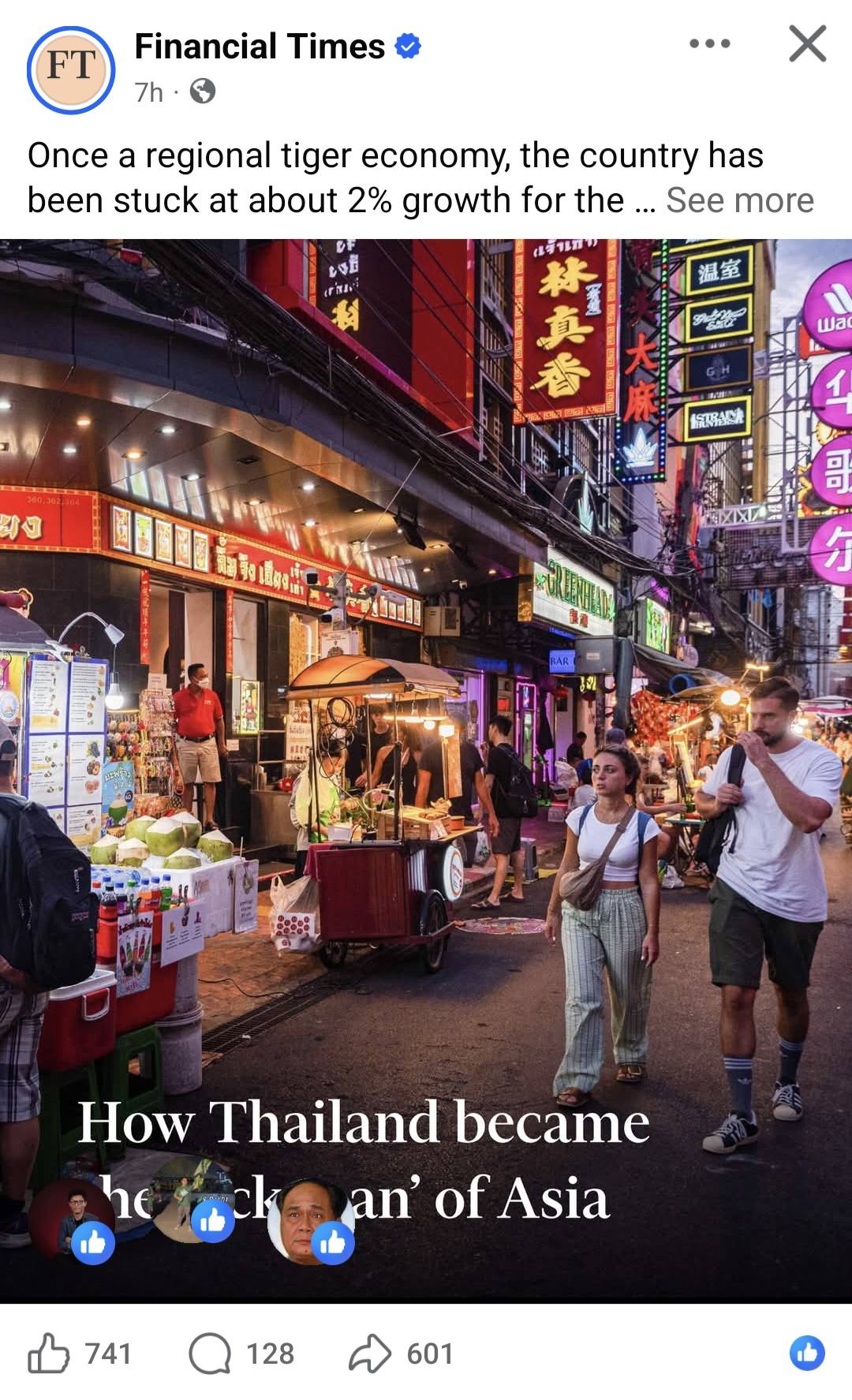
แม้กระทั่งสื่อเศรษฐกิจระดับโลกอย่าง Financial Times แห่งลอนดอน ก็ออกข่าวแล้วว่า
ไทยเป็น "คนป่วยแห่งเอเชีย" "the sick man of Asia" เพราะเศรษฐกิจชะงักงันมา 5 ปี และ GDP 2% เทียบกับชาติอื่นในอาเซียน โตมากกว่าเพียงเมียนมาร์ที่เผชิญสงครามกลางเมือง และปีนี้ไทยมีลุ้นโตรั้งท้าย
นี่คือผลของ 9 ภายภายใต้ระบอบเผด็จการและกึ่งเผด็จการทหาร และอีก เกือบ 3 ปีของการเมืองที่ไร้เสถียรภาพ ถูกแทรกแทรงโดย deep state แถมการเลือกตั้งครั้งนี้ก็ไม่มีอะไรประกันได้เลยว่าจะมีชัยชนะแบบชี้ขาดหรือเสถียรภาพ
ในสภาพเช่นนี้ เครื่องยนต์ทางเศรษฐกิจได้ เราเดินเครื่องต่อได้ก็ควรเดิน แต่อนุทินกลับหาเสียงโดยการสัญญาว่าจะไม่เปิดด่านชายแดนไทย-กัมพูชา เท่ากับปิดเครื่องยนต์ทางเศรษฐกิจหนึ่งเครื่องของไทยต่อไปแบบยาวๆ แม้เมื่อวานญี่ปุ่นจะออกมาเรียกร้องให้เปิดด่าน เพราะกระทบ supply chain เขาอย่างหนักมาครึ่งปีแล้ว
ดูเหมือนคนไทยจำนวนหนึ่งไม่เพียงไม่เข้าใจเรื่องเศรษฐศาสตร์ แถมยังไม่สนใจอน่คตสังคม
ปล. ผมคุยกับผู้สมัครปาร์ตี้ลิสต์คนสำคัญของพรรคส้มที่เข้ามาช่วยดูด้านเศรษฐกิจ แกบอกว่าดูพื้นฐานเศรษฐกิจไทยแล้ว ดัน GDPได้เต็มที่ก็ 3% และขนาดนั้นก็ยังไม่ง่ายเลย
Even a leading global business outlet like London-based Financial Times has reported that Thailand is the “sick man of Asia” because its economy has been stalled for five years. GDP growth is around 2%, higher only than Myanmar, which is mired in civil war, when compared with other ASEAN countries.
This is the result of nine years under authoritarian and semi-authoritarian military rule, followed by nearly three more years of political instability marked by interference from the deep state. Even this election offers no guarantee of a decisive victory or political stability.
Under these conditions, any functioning economic engine should be kept running. Yet Anutin is campaigning on a promise not to reopen the Thai–Cambodian border, effectively shutting down one of Thailand’s economic engines for the long term. This is despite Japan yesterday calling for the border checkpoints to be reopened, saying the closure has severely disrupted its supply chains for more than six months now.
It seems that some Thais not only fail to understand basic economics, but also show little concern for the country’s future.
P.S. I spoke with a key party-list candidate from the Orange Party who is helping oversee economic policy. He told me when asked about Democrat Party PM candidate Abhisit Vejjajiva's vows to push the GDP to 5 percent that, based on Thailand’s economic fundamentals, the maximum achievable GDP growth is only about 3%. And that is not even easy.










How Thailand became thee 'sick man' of Asia เรามาถึงจุด ๆ นี้ได้อย่างไร